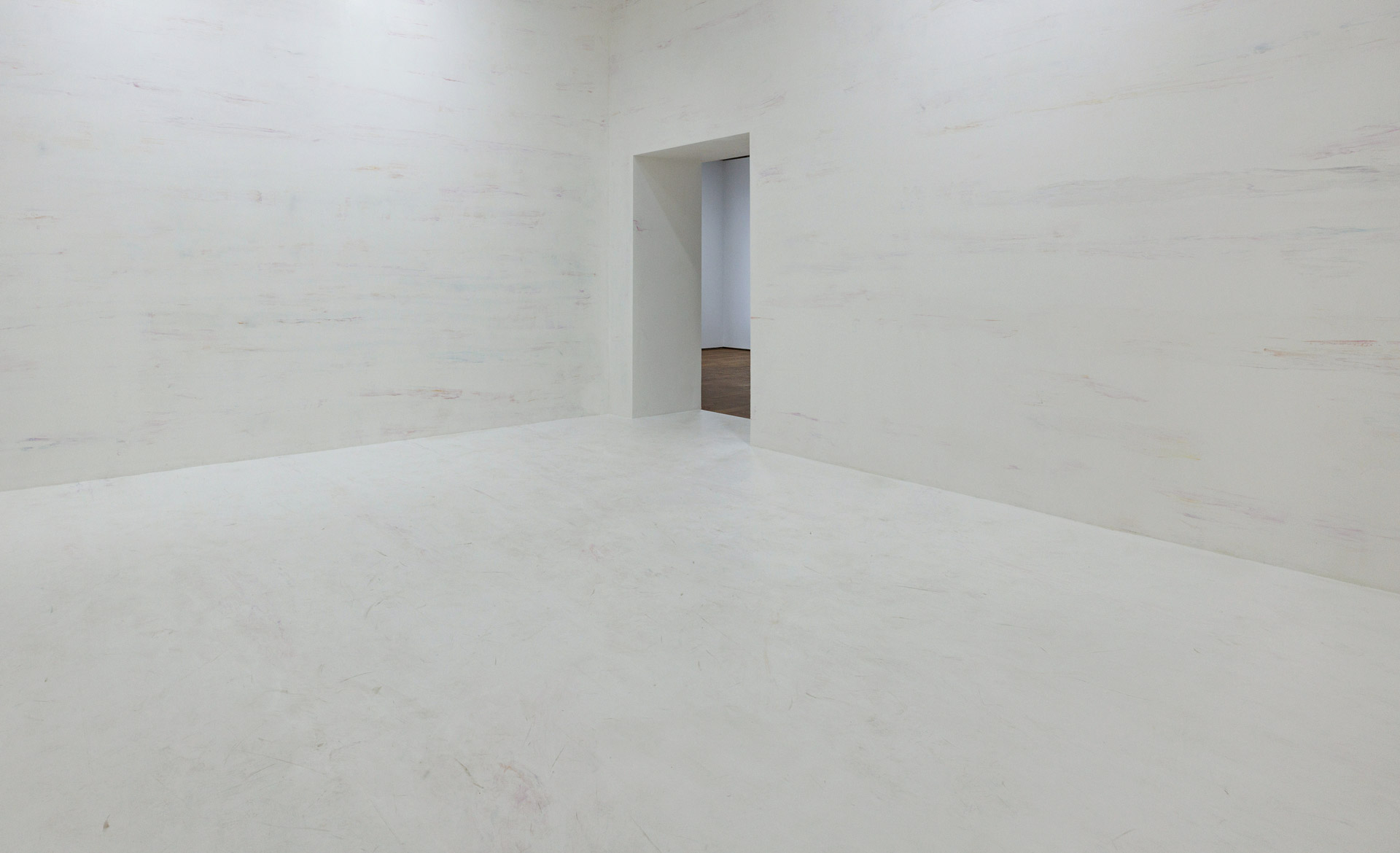
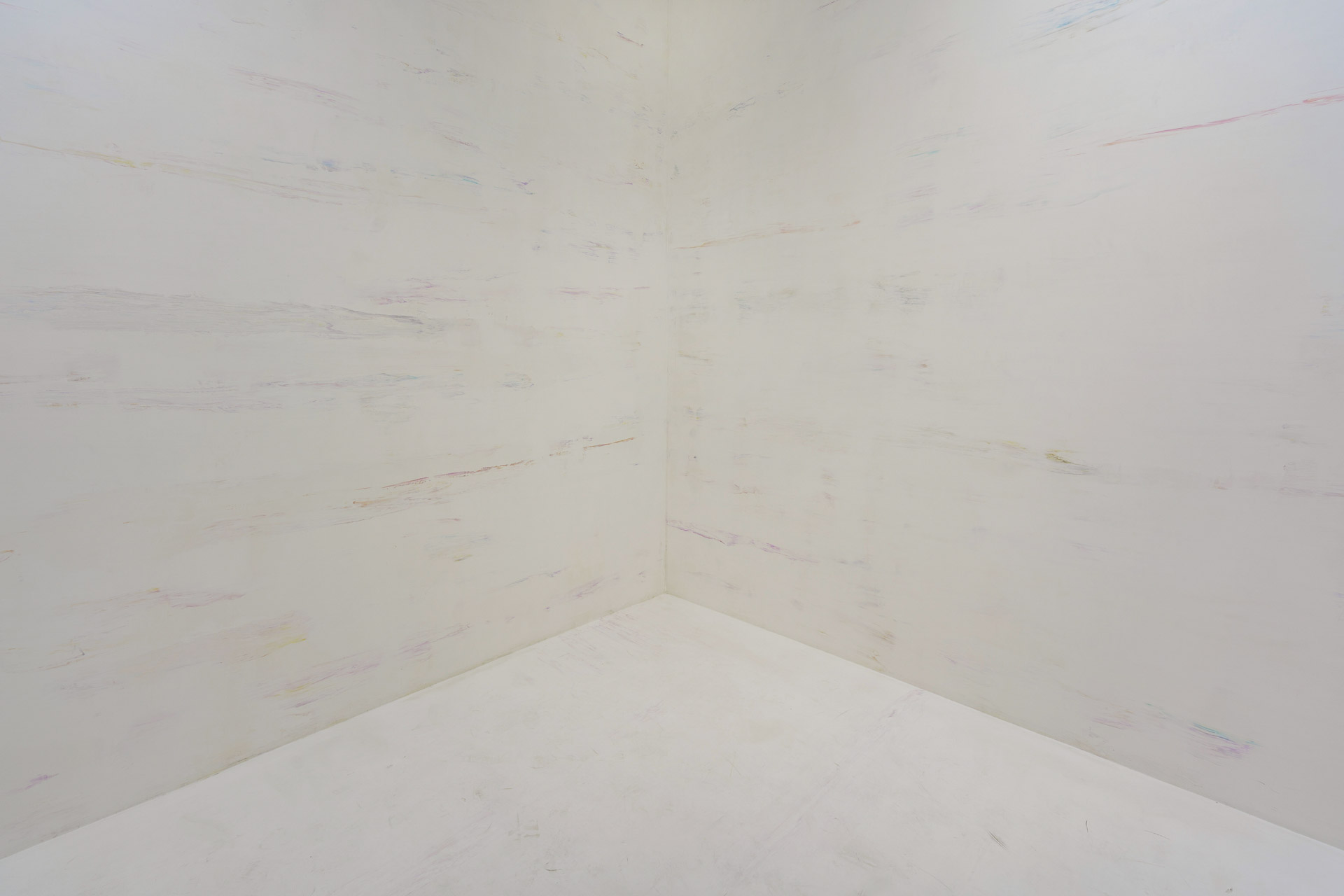
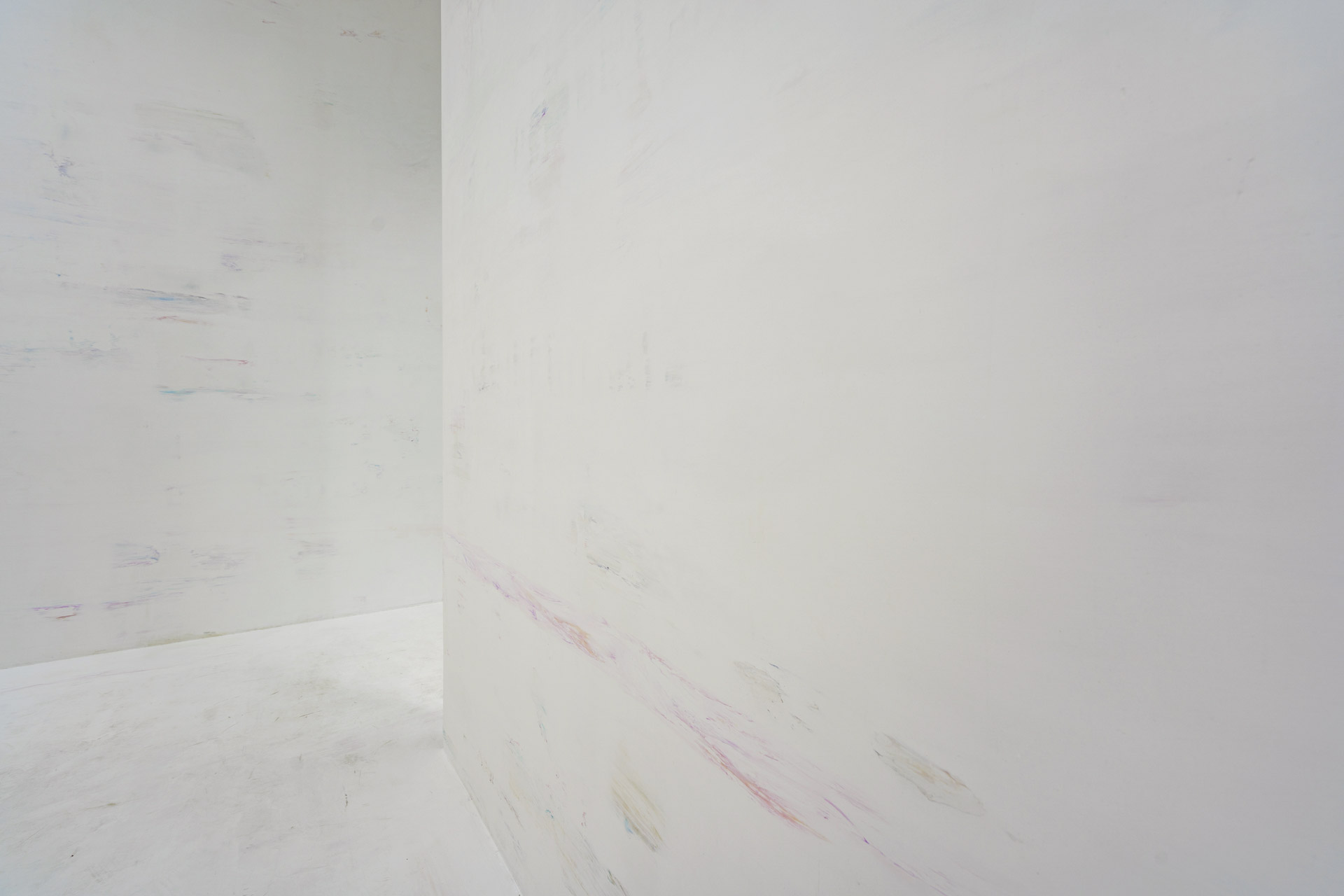
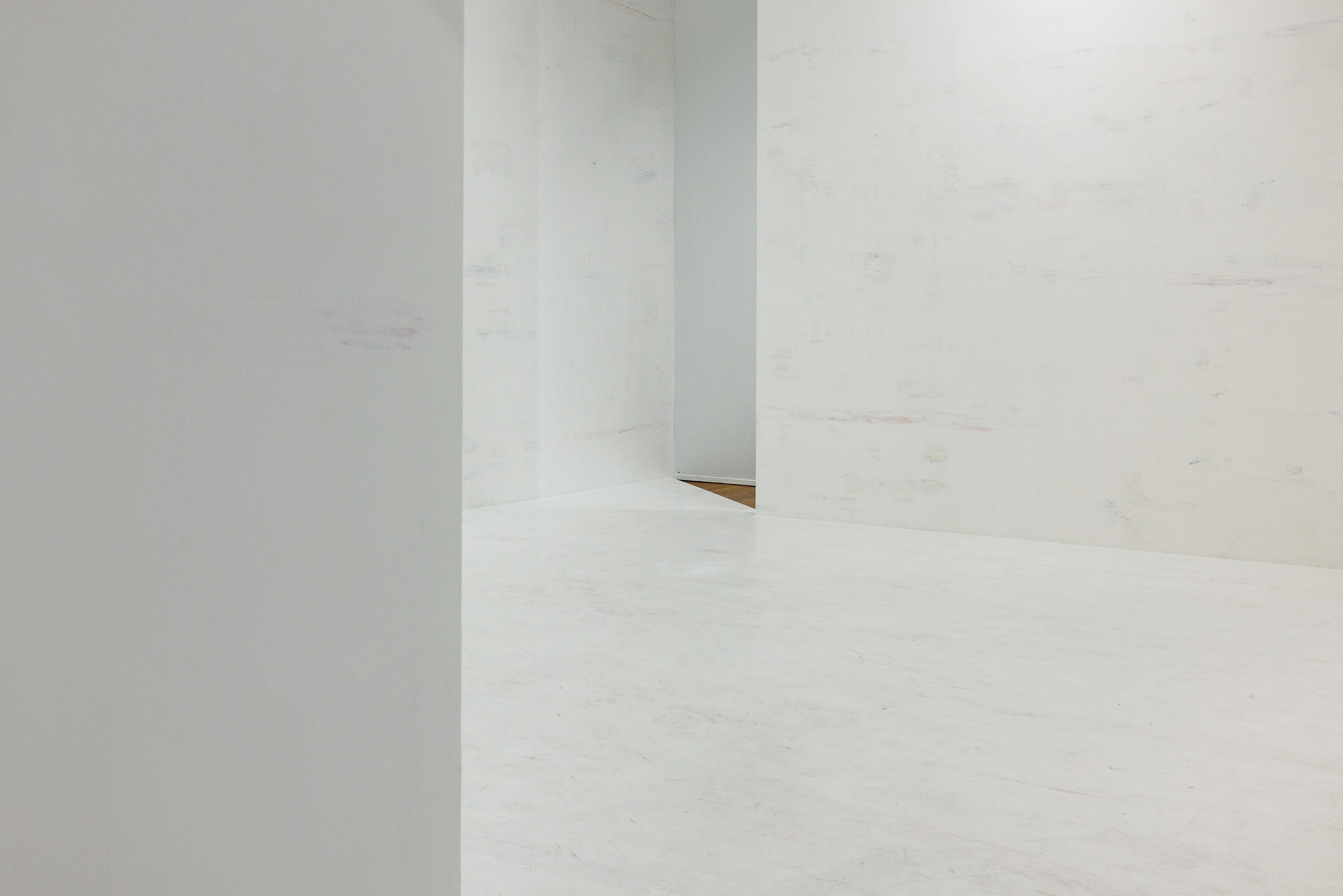
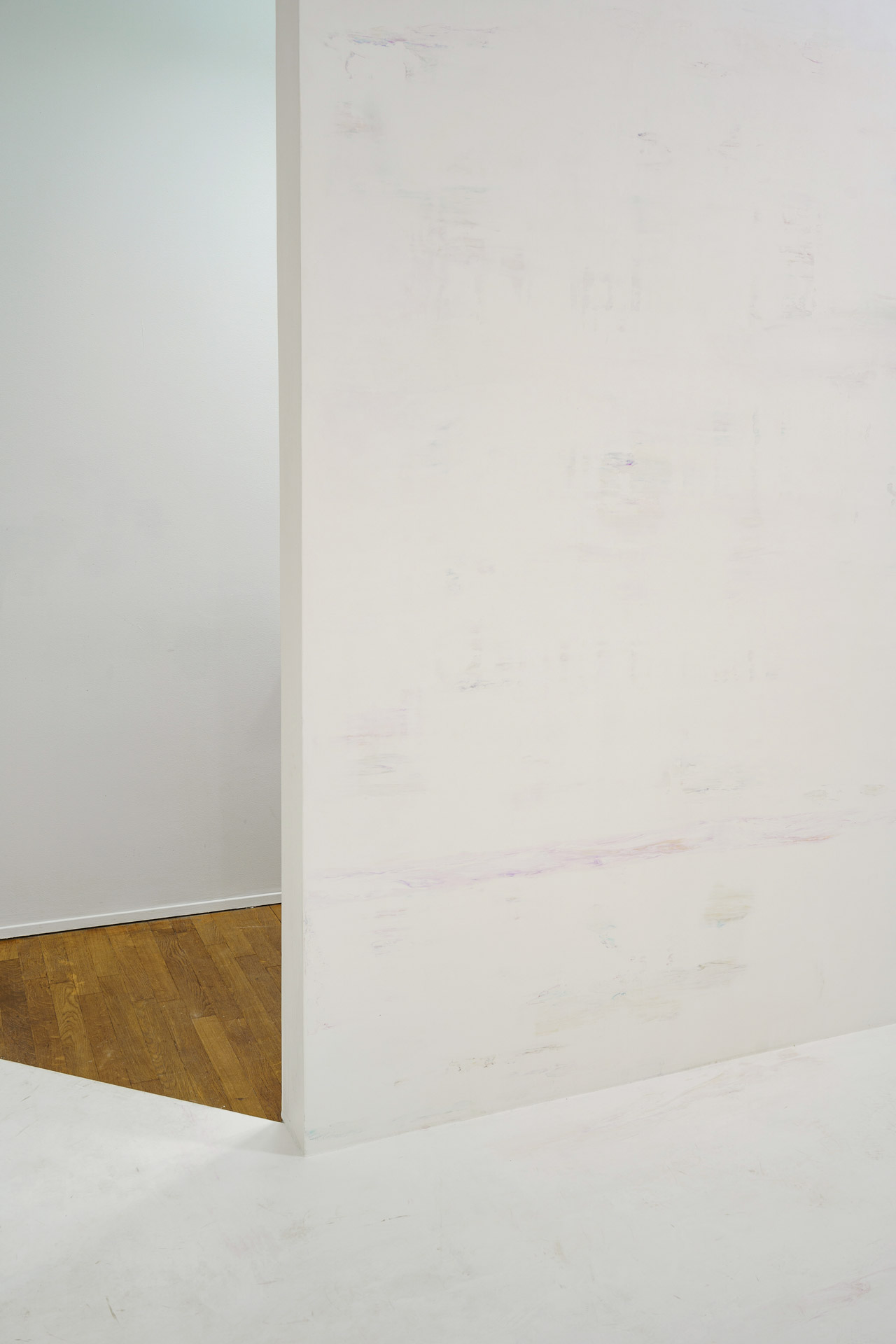
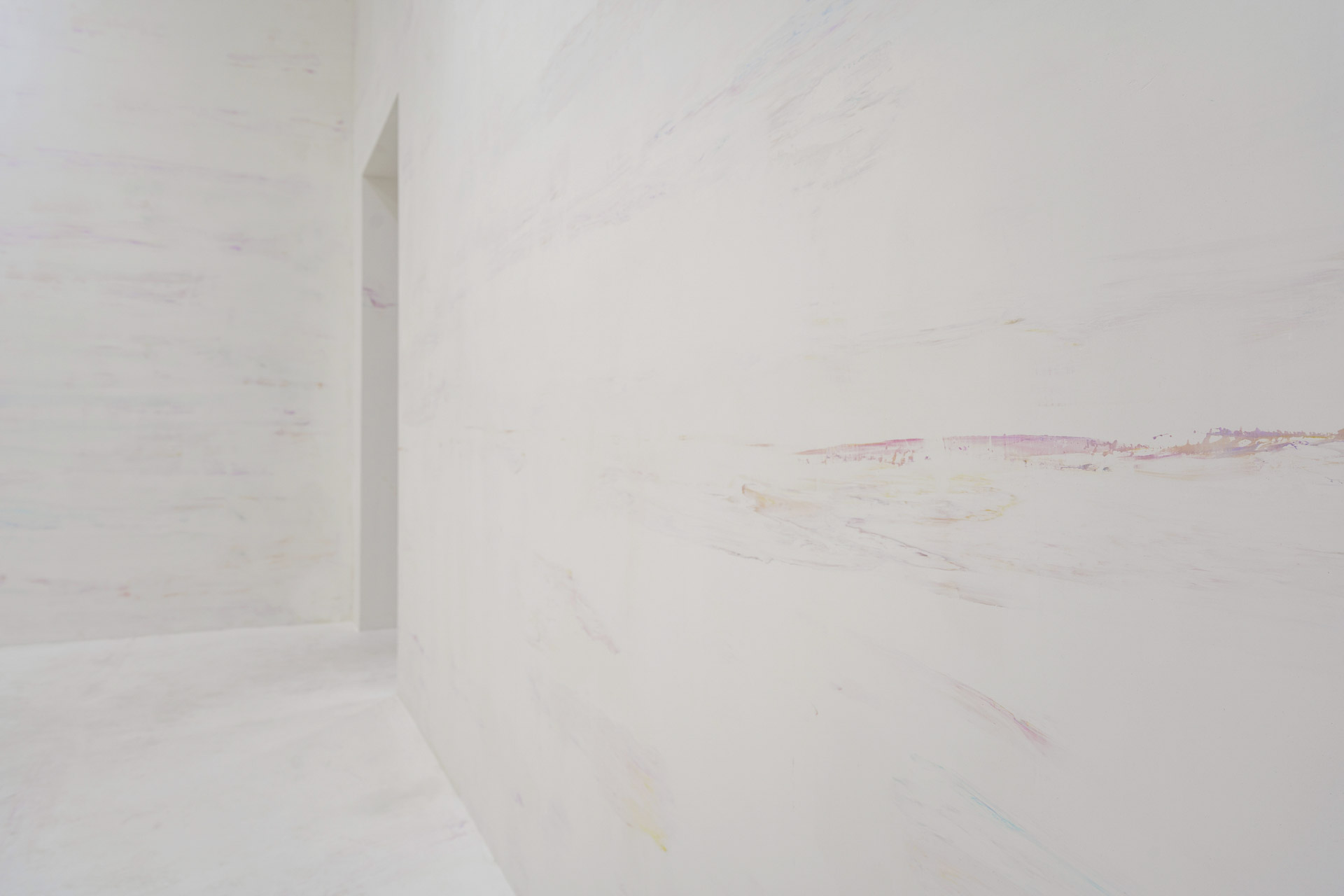
Tills is Raphaël Lecoquierre’s first solo exhibition (born 1988; lives and works in Brussels). It brings together a collection of recent works from the Nūbēs series (‘clouds’ in Latin) which began in 2010. The works in this corpus are created using a process that makes use of a vast set of vernacular analogue photographs. These images of families, landscapes or other memory instruments, gleaned and accumulated over time, are dissolved by oxidation in order to extract their coloured substance. The collected inks are incorporated into Venetian stucco and used a fresco as a pictorial material. The images documenting the world therefore disappear and are renewed on the surface of compositions with a nebulous and marbled appearance, like blocks of memories with blurry, undefined contours. The white hue of the Venetian stucco gives the works a cloudy appearance reminiscent of the Renaissance sfumato technique or certain nineteenth-century landscape paintings. The clouds here are summoned as romantic symbols, but they also mark the ephemeral character of life and the instability of the human condition. They equally refer to ‘clouds’, remote computer servers for saving and storing data. Raphaël Lecoquierre uses the photographic image as a marker of temporality, a representation of something that existed, which he undermines and subverts in order to provoke the emergence of an autonomous and timeless form of poetry.
The calcareous, rocky matter of the stucco that makes up the works in the exhibition is at the origin of the title Tills, a geological term designating the debris of sedimentary rocks which are dragged and then abandoned by glaciers as they pass. The glacier here is used as a metaphorical representation of passing time, whose traces, left by its slow and imperceptible movement, are materialised by the paintings and sculptures in the exhibition. Their forms refer to the architecture of ancient civilizations, such as the pyramid or the Gothic warhead, which may have a transcendental character, but also to the field of the more recent, trivial construction industry, like the cylinder, the board or a wall covering reminiscent of American minimalism. The motifs of the pieces, for their part, can evoke the ‘image stones’ which, according to the French writer Roger Caillois, are curious, non-precious stones that seem to constitute a true work of representative or abstract art. They also recall the founding myth della macchia (the stain) developed by Leonardo da Vinci in his Treatise on Painting 3 1 , first published in 1651: “Look at walls splashed with a number of stains, or stones of various mixed colours. If you have to invent some scene, you can see there resemblances to a number of landscapes, adorned with mountains, rivers, rocks, trees, great plains, valleys and hills, in various ways. Also, you can see various battles, and lively postures of strange figures, expressions on faces, costumes and an infinite number of things, which you can reduce to good integrated form. This happens on such walls and varicoloured stones, (which act) like the sound of bells, in whose peeling you can find every name and word that you can imagine.”
Curators: Stilbé Schroeder, Kevin Muhlen
Pictures: Lynn Theisen